
Editorial
Mother Tongue and English: Friends, Not Enemies
Must a child choose between her mother tongue and English? The evidence says no — your first language is not a wall in front of English, but a bridge towards it.
By Kavita Sharma (R&D Team, Lingobotix) | November 2026
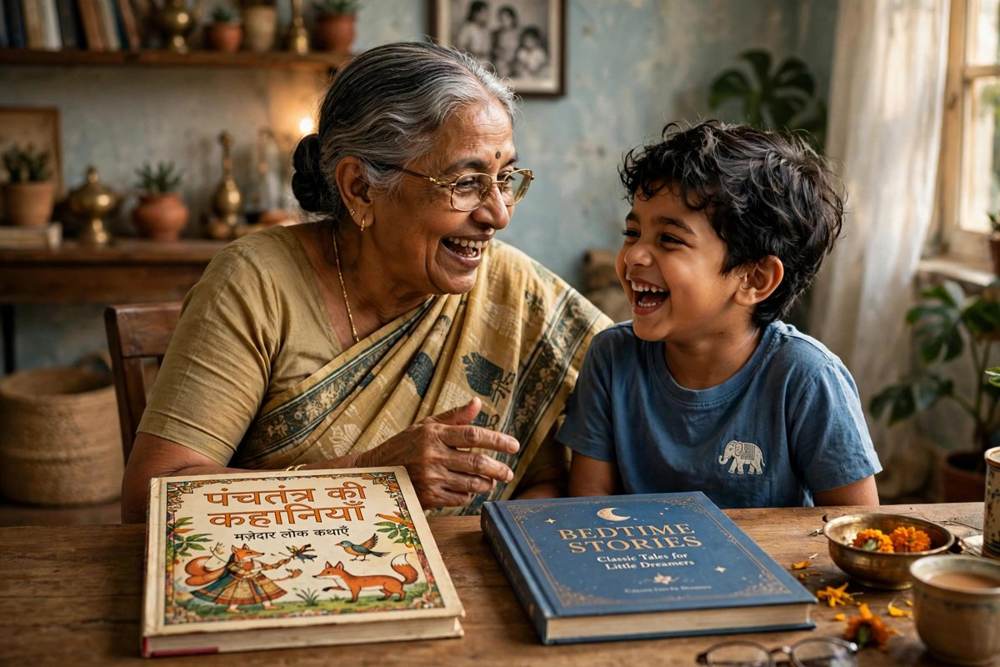
In many Indian homes, a quiet war is being fought over language. On one side stands the mother tongue — Hindi, Bengali, Tamil, Marathi, Punjabi, Malayalam — the language of grandmother's stories and the kitchen's warmth. On the other side stands English — the language of examinations, offices and opportunity. Parents and teachers often speak as if a child must choose: protect one, sacrifice the other.
This war is unnecessary. Your first language is not the enemy of English. Handled wisely, it is English's oldest friend and strongest bridge.
A False War
The fear usually sounds like this: "If the child keeps speaking Hindi at home, his English will never improve." It sounds logical, but the evidence of how brains actually learn points the other way.
Children who read and think strongly in their first language learn a second language faster, not slower. The reason is simple: language skills are not stored in separate boxes. A child who understands stories, arguments, humour and poetry in her mother tongue has already built the machinery of language. English does not need to build that machinery again. It only needs to connect new words to it.
What Your First Language Gives You
Your mother tongue gives you concepts. You already know what a harvest is, what jealousy feels like, how a joke lands. Learning English is mostly learning new labels for a world you already understand — a far easier task than learning the world itself.
It gives you courage, too. A student who is respected for her strong Hindi does not approach English as a beggar. She approaches it as an owner adding a second house to her property. That confidence changes everything: how she practises, how she recovers from mistakes, how far she goes.
And it gives you translation — a powerful tool when used briefly and deliberately. One quick meaning in your own language can unlock a difficult English word in two seconds. The tool becomes a problem only when it becomes a crutch used for every single step.
Use the Bridge, Then Cross It
So how should a learner use the mother tongue wisely?
Use it to understand, then return to English to practise. Read the meaning, then close the dictionary and say three English sentences with the new word. Think in your first language when the idea is difficult — then work to express the finished thought in English. Enjoy stories and songs in both languages without guilt; a bilingual mind is not a divided mind, it is a doubled one.
Teachers and parents can help by ending the false war at home. Praise the child's mother tongue and her English in the same breath. Let the home be rich in one language and the classroom rich in the other, and watch the two strengthen each other like the two legs of a walker.
You do not have to betray your first language to win your second. The tongue that taught you to speak at all is not standing in your way. It is standing behind you, pushing you forward.