
Editorial
Grammar Is a Map, Not the Journey
Grammar helps you find your way, but it is not the journey itself. Learn how to use rules lightly and keep your eyes on real conversation.
By Vikram Sethi (R&D Team, Lingobotix) | November 2026
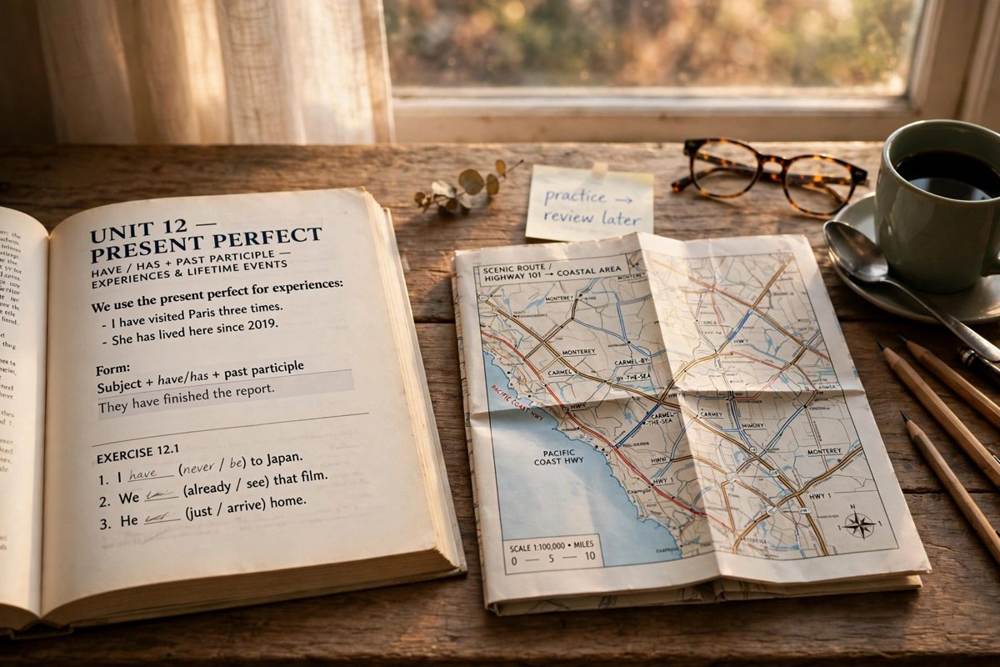
Many students treat grammar like a strict school principal. They fear it, they obey it, and secretly they wish it would go away. Others do the opposite: they collect grammar rules the way some people collect stamps, yet freeze when they must speak. Both groups have misunderstood what grammar really is. Grammar is a map. And a map, however beautiful, is not the journey.
A map of India can show you the road from Lucknow to Delhi. It cannot drive the car for you. It cannot let you feel the wind, miss a turn, ask a stranger for help, and find your way again. Language learning is that journey. Grammar simply helps you understand where you are.
1. What Grammar Can and Cannot Do
Grammar is genuinely useful. It shows patterns. It explains why we say "she goes" and not "she go." It helps you write a clear application, a correct exam answer, a polite email. A learner who ignores grammar completely will keep making the same mistakes for years, like a traveller who refuses to look at any signboard.
But grammar cannot give you words. It cannot give you courage. It cannot give you the quick, living feel of a conversation at a railway station or in an office. Those come only from listening, reading, and speaking in real situations. A student may score full marks in grammar exercises and still struggle to ask for a glass of water in English. The map was perfect. The journey never began.
2. Use the Map, Then Look Up
The healthiest way to learn is simple: study a little grammar, then use it immediately in real sentences about your own life. Learned the past tense today? Write five true sentences about yesterday. Learned questions? Ask your friend ten questions at lunch. When a rule enters your own story, it stops being a rule and becomes a tool.
Also, do not try to learn the whole map before starting. Travellers do not memorise every road in India before their first trip. Learn the grammar you need for where you are going now. Small pieces, used daily, will quietly join together into a full picture over time. Your teacher and your books will guide the order. Trust it.
3. Mistakes Are Just Wrong Turns
On a journey, a wrong turn is not a disaster. You look at the map, you correct your direction, and you continue. In English, a grammar mistake is the same. It shows you exactly what to fix next. This is valuable information, not shameful failure.
So keep your grammar book close, but keep your eyes on the road. Speak, read, listen, and travel through the language every day. Use the map when you are lost. The rest of the time, enjoy the journey. After all, nobody frames a map and hangs it on the wall. We remember the places we actually went.