Editorial
Email English: Writing That Gets Replies
A clear subject, a simple structure and a few kind phrases can turn the blank email screen from an examination hall into a door that opens.
By Priya Nair (R&D Team, Lingobotix) | November 2026
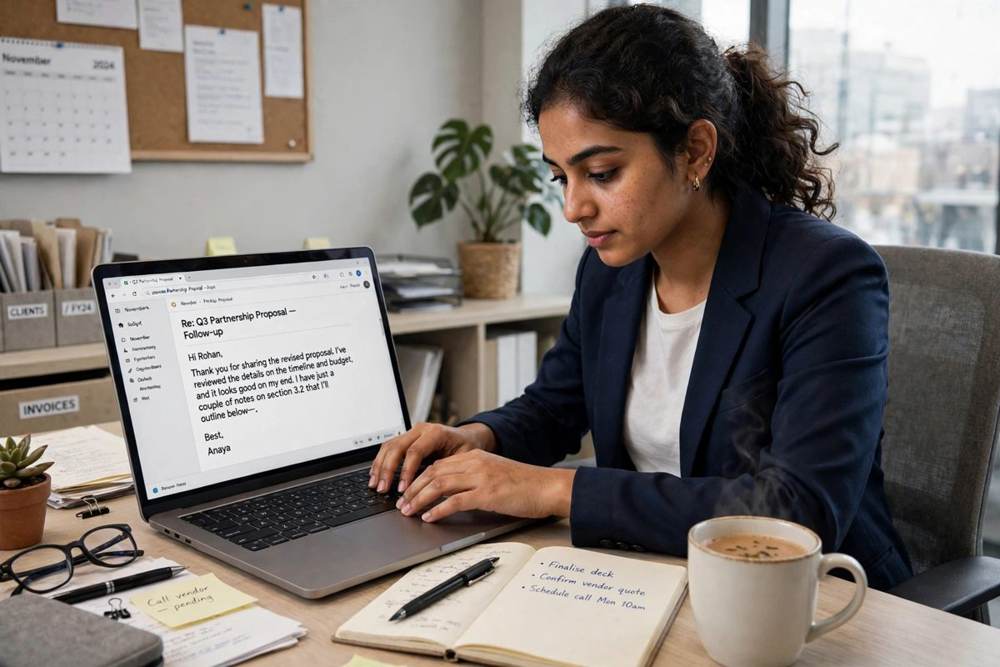
A strange thing happens in offices every day. A person who speaks English comfortably in the corridor will sit before a laptop, open an email, and freeze. The blank screen feels like an examination hall. What is the correct subject line? How should the letter begin? Will the reader judge every small mistake? So the email takes thirty minutes, or it is never sent at all.
Here is the liberating truth about email: nobody expects literature. A good office email is not beautiful; it is clear, polite, and quick to understand. People reply to emails that respect their time. If you learn a simple structure and a few kind phrases, your emails will start getting the replies they deserve.
1. Begin with a Clear Purpose
Before you type a single line, ask yourself one question: what do I want the reader to do after reading this? Apply for leave, approve a file, attend a meeting, send a document — every good email has one clear purpose, and the reader should see it in the first two lines.
Your subject line is a promise. "Request for Leave on Friday, 14 November" tells the reader everything. "Request" tells them nothing. Busy managers open clear subjects first and vague subjects last, or never.
Inside the email, put your main point early. Do not hide your request at the bottom of a long story. A reader who understands your purpose in ten seconds is already halfway to saying yes.
2. A Simple Structure That Always Works
Almost every office email can follow four gentle steps. First, a polite greeting: "Dear Sir," "Dear Madam," or simply "Good morning, Mr Sharma." Second, one line of connection or context: "I am writing regarding the science exhibition next week." Third, your main message in short paragraphs — one idea in each. Fourth, a clear and kind closing: "Please let me know if this time suits you. Thank you for your support."
End with your name and, if needed, your phone number. Read the email once before sending, slowly, as if you were the reader. Check names, dates, and numbers twice; a wrong date causes more trouble than a small grammar slip ever will.
Keep your sentences short. In email, short sentences look professional, not weak. They are easy to read on a phone screen, which is where most people now read their mail.
3. Phrases That Make People Want to Reply
Politeness is not old-fashioned; it is practical. "Could you please share the report by tomorrow?" receives a warmer response than "Send the report." "Thank you for your guidance" costs you five seconds and earns goodwill for months.
If you are following up, stay patient and specific: "This is a gentle reminder about my application sent on Monday. I would be grateful for an update when convenient." Never write in anger, and never write an important email when you are tired. Draft it, rest, read it again, and then send.
Email English is a skill of the workplace, not of the classroom. Practise it in small ways — write your leave applications, your thank-you notes, and your daily updates in careful English. Within a few months, the blank screen will stop feeling like an examination. It will feel like what it truly is: a door, and your words are the knock that gets it opened.