
Editorial
Teach It to Learn It
Teachers have always known the secret: what you teach, you never forget. How explaining one word or rule to someone else doubles your own English.
By Ananya Deshpande (R&D Team, Lingobotix) | November 2026
There is an old secret among teachers, and it is time somebody told the students: the person who learns the most in any classroom is the teacher. Not because the teacher knows everything, but because teaching forces the mind to organise, explain, and truly understand. What you can teach, you cannot forget.
This works for language learners too. The day you explain an English word or a grammar point to someone else, your own English takes a jump. Many toppers in school quietly know this. They are the ones always helping classmates before the exam — and helping themselves the most.
1. Teaching Shows You the Gaps
You can read a rule ten times and believe you know it. Then a younger student asks, "But why do we say 'he goes' and not 'he go'?" — and suddenly you discover the hole in your own understanding. This discovery is not a failure. It is a gift. You cannot repair a gap you have never seen.
Teaching is like holding your knowledge up to a bright light. The strong parts shine. The weak parts show their cracks. Every question from your student is a small test you did not have to pay for, and every answer you search for makes the knowledge yours forever.
2. Teaching Makes It Stay
Psychologists who study memory have a finding that surprises everyone: we remember a small part of what we read, more of what we hear, and the most of what we teach. Explaining forces you to find simple words, build examples, and say the idea aloud in your own voice. The idea stops being the book's property and becomes yours.
There is a second gift, too. When you teach English, you must speak English — slowly, clearly, again and again. Your student thinks you are giving them practice. In truth, you are giving yourself the best speaking practice of all: real words, spoken for a real reason, to a real listener.
3. Start Small, Teach One Thing
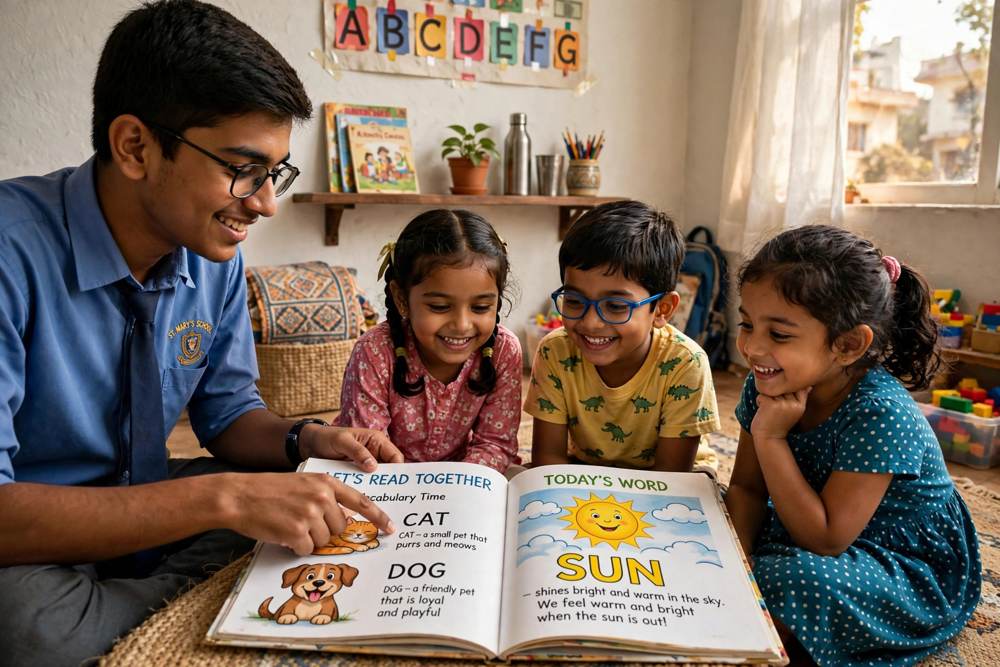
You do not need a classroom or a blackboard. Teach one thing to one person. Show your younger sister five new words at dinner. Explain today's lesson to a friend on the bus. Help your mother learn one sentence she can use at the bank. Read a picture book aloud to the children in your building and translate the story as you go.
Keep it joyful. If your student laughs and learns, you have taught well. And when a question defeats you, smile and say, "I will find out and tell you tomorrow." Then find out. That search, too, is learning.
So find someone to teach — a sibling, a friend, a neighbour, anyone who will listen. Share one word, one rule, one sentence today. You will discover what teachers have always known: knowledge that is given away does not decrease. It doubles.