
Editorial
The Hundred Words That Do Half the Work
English has over 170,000 words, but a small team of about a hundred does nearly half of all the work. Meet the champion words — and learn how to make them yours.
By Priya Nair (R&D Team, Lingobotix) | November 2026
English has more than a hundred and seventy thousand words in current use. That number frightens many learners — until they learn the secret hidden inside it. You do not need all those words. You do not need even half of them. In everyday English, a tiny team of about one hundred words does nearly half of all the work.
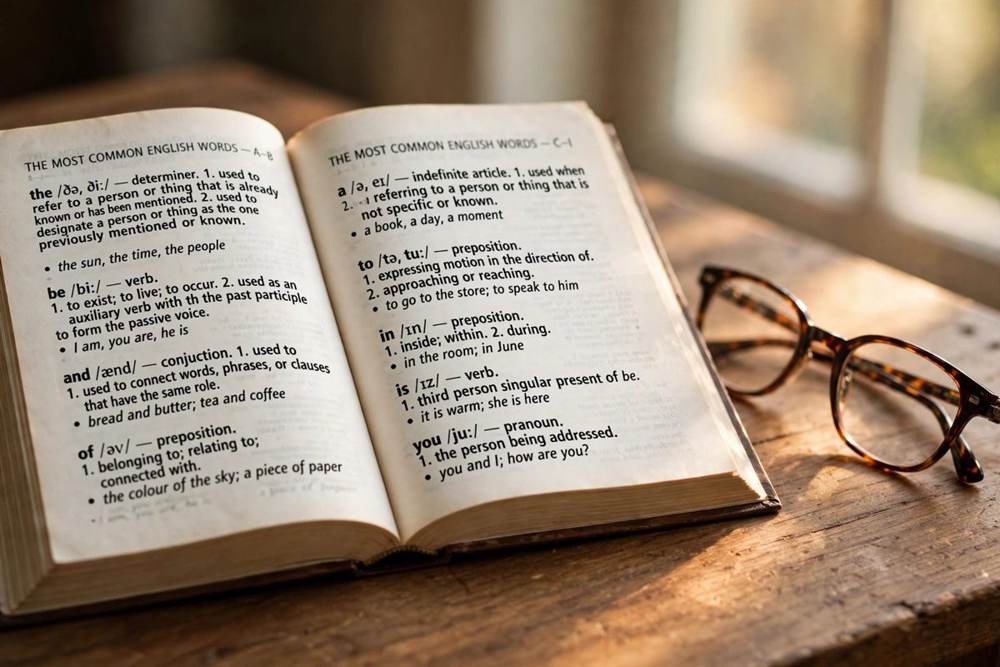
Open any English newspaper, storybook or conversation, and count. Again and again you will meet the same small words: the, be, to, of, and, a, in, that, have, I, it, for, you, he, with, on, do, say, this, they, at, but, we, his, from, not, by, she, or, as, what, go, their, can, who, get, if, would, her, all, my, make, about, know.
A Small Team Doing Heavy Work
Linguists who study millions of sentences have found a remarkable pattern: the hundred most common English words make up roughly half of everything written and spoken. Add the next nine hundred words, and you can understand about three quarters of ordinary English.
Think about what this means. The mountain is not as tall as it looks. The first and most important peak is small, friendly, and completely climbable.
Meet the Champions
The hardest-working word in English is "the". Then come the little connectors and helpers — of, and, a, to, in, is, you, that, it. They are not grand words. Nobody frames them on a wall. But remove them, and no sentence can stand.
After them come the great action words — say, get, make, go, know, take, see, come, think, look — and the words of daily life: time, year, people, way, day, man, thing, woman, life, child, world, school, family, group, country, problem, hand, part, place, case, week, company, system, program, question, work, government, number, night, point.
A learner who truly owns these words — who can hear them, read them, and use them without thinking — holds the skeleton of the whole language. Every new word learned afterwards is flesh on a frame that already stands.
How to Learn the Hundred
Do not memorise the list like a prisoner. Meet the words where they live — in sentences.
Read simple stories and notice how often the champions appear. When you speak, lean on them proudly; they are not "too easy", they are the words native speakers lean on too. Practise making five different sentences with one champion word — I go, go there, let us go, going home, gone — and the word becomes yours forever.
Big vocabularies impress people for a day. The hundred words carry you for a lifetime. Master the small team first, and the rest of English will arrive faster than you ever expected.